
Pretty Good House
A practical approach to better homes…
Pretty Good House is a practical framework for designing and building homes that are comfortable, durable, energy efficient, and environmentally responsible—without unnecessary complexity.
The concept grew out of conversations within the building science community about what actually matters most when designing a home. Rather than chasing extreme performance targets or adding layers of technology, the Pretty Good House approach focuses on clear priorities: a durable building enclosure, thoughtful design, good indoor air quality, and right-sized mechanical systems.
The goal is simple: homes that perform well, feel comfortable to live in, and hold up over time.
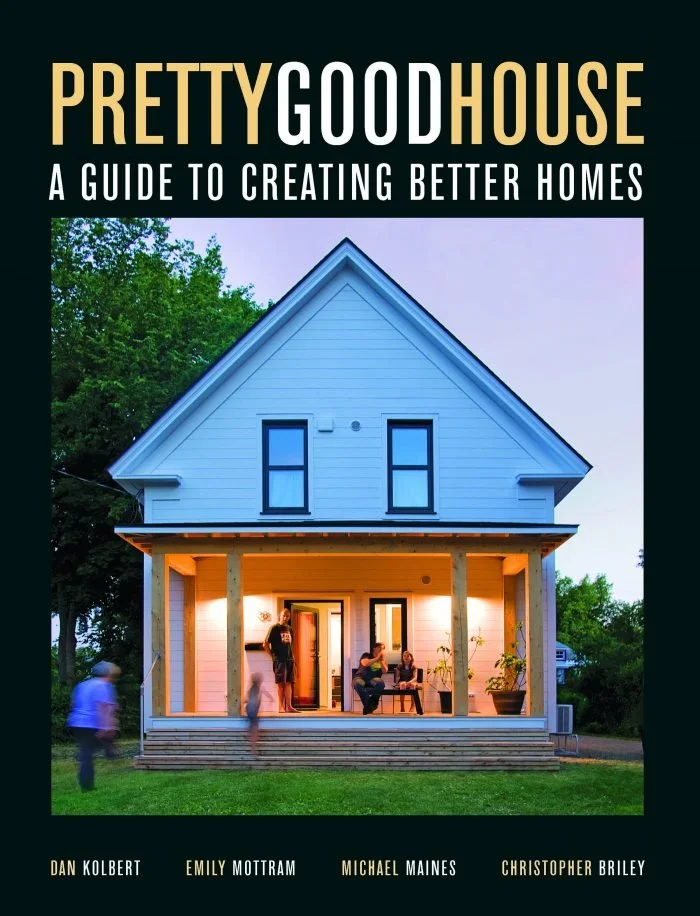
The Pretty Good House Book
The book Pretty Good House was written by Michael Maines, Emily Mottram, Daniel Kolbert, and Christopher Briley, bringing together perspectives from residential design, construction, and building science.
It explains the principles behind the approach and provides practical guidance for homeowners, builders, and designers who want to create better homes without unnecessary complexity.
Topics covered in the book include:
Designing durable building assemblies
Managing moisture and air sealing
Ventilation and indoor air quality
Energy-efficient building strategies
Practical material choices and climate considerations
The book has become a widely referenced resource in the building industry and among homeowners interested in high-performance homes.
Many of the same ideas guide the work we do at Mottram & Maines—integrated design, practical priorities, and building science as the baseline.
Homes are complex systems. Decisions about layout, insulation, ventilation, windows, materials, and mechanical systems all interact with each other.
The Pretty Good House framework helps keep those decisions connected, focusing on strategies that deliver the greatest impact for comfort, durability, and long-term performance.
You can explore the Pretty Good House approach through the book, industry conversations, and the broader building science community that continues to develop these ideas.