
From Feeling to Form: What We Hear When Clients Describe the House They Want
Clients Speak in Feelings First
Clients do not walk into an architect’s office speaking in technical details. They show up speaking in pictures and feelings.
I want a cozy house. I want it to have character. I want it bright but not exposed. I want something modern, but not cold.
That is exactly where good architecture starts, because the work begins long before drawings begin. It begins the moment someone tries to describe how they want to feel in their own home.
Clients are fluent in lived experience. Architects are fluent in systems, proportion, sequencing, budgets, and what a building will do over time. The job is to take what clients mean and turn it into a home that performs the way they hope it will.
What Clients Need to Do in Early Conversations
Clients should be loose with language, because they are the expert on their life. They know what they want to feel when they walk into the kitchen on a Tuesday morning. They know what kind of quiet they crave on a Saturday night. They know whether “cozy” means candlelit and tucked in, sunlit and calm, or some mix of the two.
Clients do not need the technical vocabulary. They only need to describe the outcome and what matters most.
Then the translation begins.
Designing With Performance in the Room From Day One
Emily talks about this as designing with performance in the room from the start. Building science is not something added at the end. It is woven into decisions as they are made, so the beautiful thing also behaves beautifully.
That mindset changes how client requests are received. When someone says “cozy,” it is not treated like a style choice. It is treated like a set of conditions that can be designed for.
When a Client Says “Cozy,” Here is What We Hear
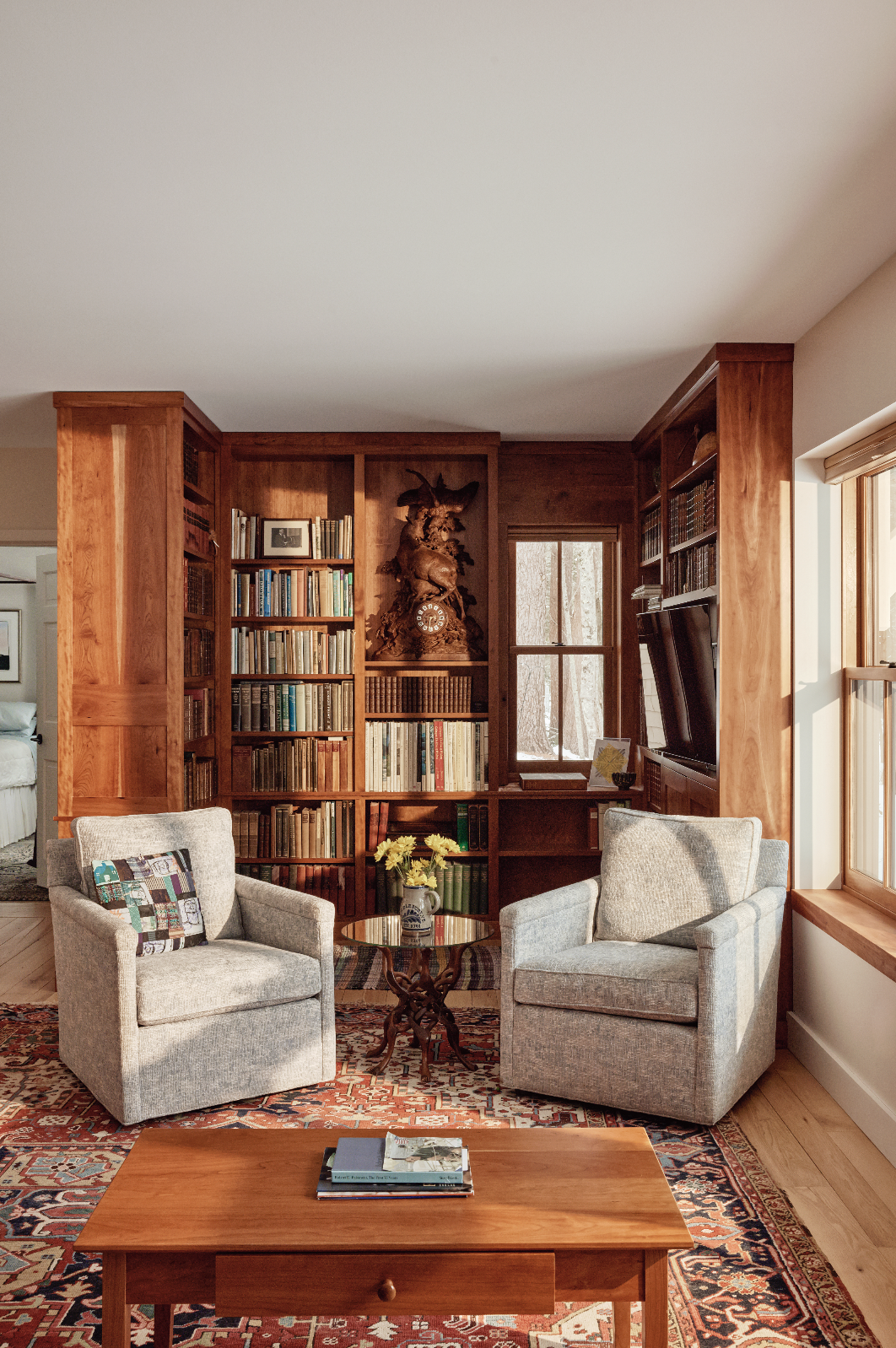
Cozy usually points to a cluster of design moves working together, where comfort is supported by the space, the materials, and the way the home holds heat, light, and sound.
Key elements that often create “cozy”
Warmth underfoot and at touch points
Seating placed with intention relative to windows and a focal point
Lighting that layers and glows instead of washing everything in uniform brightness
Ceiling height and enclosure where people naturally want to linger
Acoustics that soften the room so it feels calm instead of sharp
Clients often want openness and shelter at the same time. That combination is achievable, but it does not happen by accident. It takes a handful of specific decisions working together, early enough that they shape the whole plan.
When a Client Says “Old World Feel,” Here is What We Hear
Now take the client who says, “I want an old world feel, but we’re building a modern house.”
That request gets misunderstood because “old world” sounds like a style directive. What clients often mean is more specific. They want depth. They want shadow. They want a sense of craft. They want a home that feels dimensional and has character, not flat or overly perfect.
Michael’s shorthand is simple: create shadow lines and texture.
How Depth and Craft Show Up in Real Design Choices
In practice, that richness shows up in details most people do not notice individually, but everyone feels collectively.
Design moves that create visual weight
Trim and casing profiles deep enough to cast real shadows
Layered edges at transitions
Reveals, returns, and thickness where it matters
Proportions that feel settled instead of stretched
A rhythm to windows and openings that feels intentional
Materials with honest texture and subtle variation
Lighting that creates gentle gradients instead of one bright glare
A home can stay clean and modern and still feel grounded and rich. It simply has to be designed for early.
The Translation Always Has Real Boundaries
This is the heart of architect translation. Clients do not arrive with a checklist of technical solutions. They arrive with values.
Comfort
Beauty
Quiet
Durability
Warmth
A certain kind of morning light
A house that feels like a refuge
Those values still need to fit inside real constraints.
How Constraints Shape the Same Feeling in Different Ways
Design language matters
If clients love clean modern lines, the path to “cozy” looks different than it does in a more traditional home. The feeling can stay the same while the moves change.
Budget matters
Some decisions cost more. Some cost less but require better coordination. Some are worth prioritizing because they shape daily comfort, while others can be simplified without losing the point.
Climate matters
What works beautifully in one region can underperform in another. Window strategy, shading, ventilation, moisture control, durability, and resilience are part of the translation whether clients mention them or not.
Site matters
Orientation, views, neighbors, topography, trees, wind, and access shape the lived experience. Two lots can turn the same plan into two completely different homes. If clients want privacy and light, the translation includes sightlines, placement, and how the house opens in one direction while protecting another.
Performance matters
Comfort, air quality, and consistency room to room are part of what makes a house feel good. A home can look right and still feel wrong if it is drafty, noisy, or uneven.
What We Listen for Under the Words
That is why Mottram and Maines does not wait for clients to become fluent in architecture. The work is to become fluent in clients. To hear what is underneath the sentence, then design for that.
“I want an open kitchen” often means “I want to be connected while cooking, and I do not want the house to revolve around mess.”
“I want big windows” often means “I want a strong connection to the outdoors, and I still want privacy.”
“I want it quiet” often means “I am tired of hearing everything, including footsteps, HVAC, and appliances.”
“I want low maintenance” often means “I do not want to spend weekends sealing, painting, repairing, or worrying.”
Each of those can be designed for. The right answer depends on what matters most and what constraints the design needs to respect.
Introducing the Series
That is why we are launching a series called From Feeling to Form.
On Instagram, the series will share real examples of the translation process over the coming year. The phrase a client says, the moves that start mapping right away, and the balancing act managed behind the scenes so the final home delivers the feeling without sacrificing what clients value, whether that is budget, performance, longevity, or simplicity.
What to Tell Your Architect in Early Conversations
If you have ever worried about saying the “right” things in early design conversations, the pressure can come off. You do not need perfect words. You need honest ones.
Describe the feeling
Describe the moments the home is meant to support
Name what matters most
Name what is not negotiable
The job is to translate that into a home that fits real life, and then show how it got there.